
Qigong basics: stance and gradual progress
Qigong coordinates posture, breath, and attention. Beginners don’t need complex sets — they need alignment, softness, and a repeatable structure.
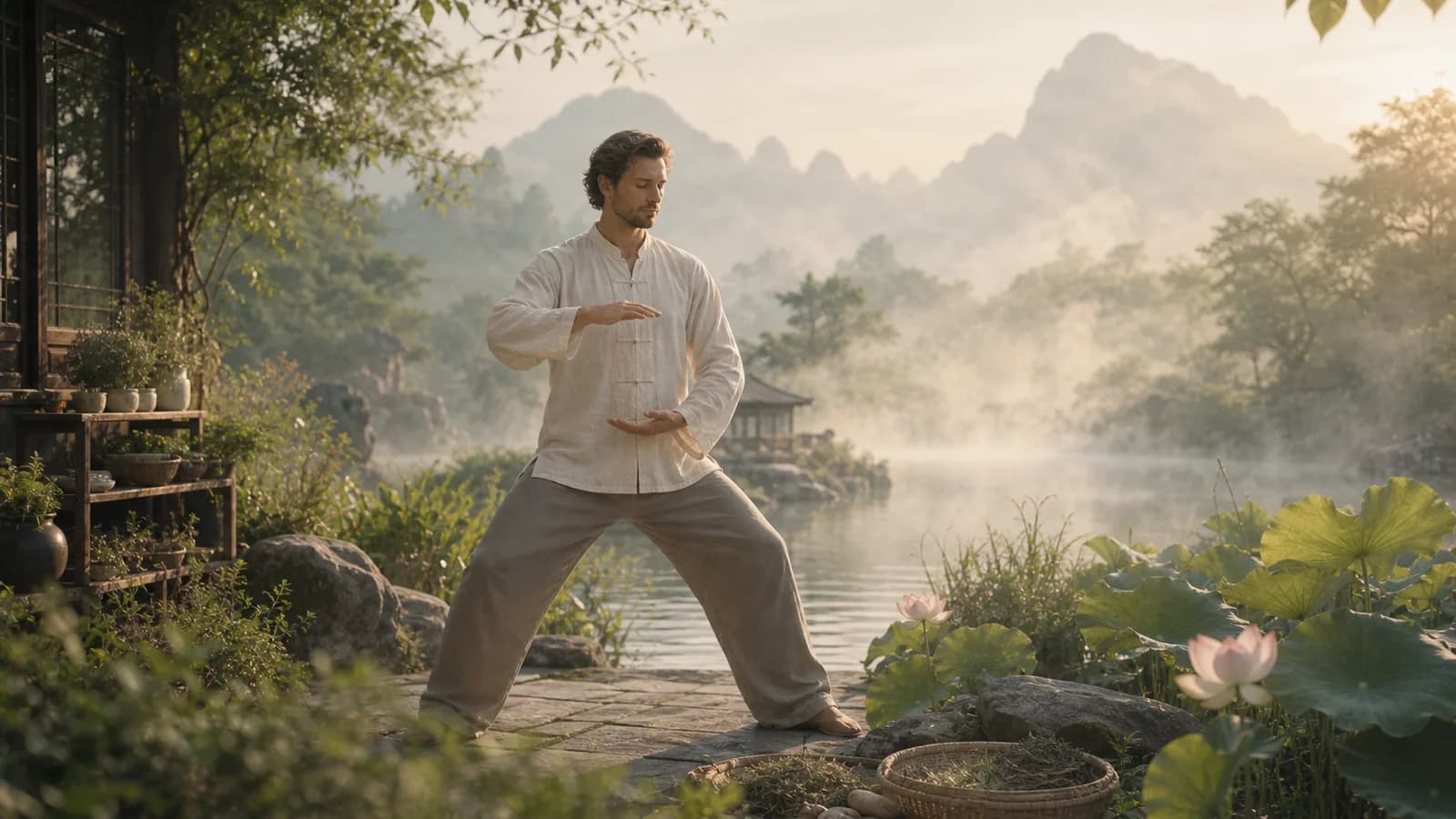
What qigong is
Qigong is a family of mind‑body practices. With posture, movement, breathing, and attention working together, you train steadiness and reduce unnecessary tension.
Beginner keys: soften, sink, slow, align
“Harder” isn’t “better”. You want relaxed stability: soft but not collapsed; grounded but not rigid.
- Soften: relax shoulders, chest, face, and jaw
- Sink: feel weight through the feet; avoid “floating up”
- Slow: continuous movement; breath follows naturally
- Align: head balanced; spine long without forcing
A simple daily structure (10–15 minutes)
Start small. Consistency beats complexity.
- 2 min: warm‑up (neck/shoulders/hips/ankles, gentle)
- 5 min: standing practice (easy stance; knees soft)
- 5 min: slow movement (simple flowing patterns)
- 1–3 min: closing (rub hands, cover lower abdomen, natural breath)
Progression (keep it sustainable)
Build the “everyday version” first, then add volume gradually.
- Week 1: 5–8 minutes daily (stance + closing)
- Weeks 2–3: 10–15 minutes daily (add slow movement)
- Long term: protect rhythm; avoid boom‑and‑bust training
Common mistakes
If you feel more tired, more irritable, or sleep gets worse, simplify and reduce volume.
- Chasing “qi sensations” instead of posture and relaxation
- Pushing through knee pain
- Skipping closing and feeling scattered afterwards
- Treating practice as punishment rather than restoration
Safety notes
Stop if you feel dizziness, chest tightness, palpitations, or significant pain. If you’re in recovery or have chronic conditions, practice with guidance.
- Comfort first: knees track comfortably; avoid collapsing the lower back
- Reduce time first, then adjust posture and rhythm
- Educational guidance only; not medical advice
Guides & topics
A practical hub for self‑cultivation: classical Chinese learning, Daoist yangsheng, self‑awareness, breathwork (吐纳), and qigong — with safety‑first guidance and modern tracking.
Guoxue (Classical Learning): your map for self‑cultivation
A practice‑oriented entry point into the Dao De Jing, Zhuangzi, and the Huangdi Neijing — and how to turn study into daily life.
Daoist philosophy & yangsheng: a daily framework
Naturalness, balance, rhythm — translated into sleep, food, movement, breathwork, and a calmer way to relate to stress.
Self‑awareness: turn sensation into feedback
Track what matters: sleep, stress, digestion, energy, emotions, and tension — so you can adjust with clarity instead of guesswork.
Breathwork (吐纳): settle, regulate, and refine
Simple, safety‑first breathing practice: slower rhythm, longer exhale, fewer mistakes — without chasing intensity.